Commercial Waste Golders Green — Recycling and Sustainability
Commercial Waste Golders Green services are focused on creating an eco-friendly waste disposal area and a practical, long-term approach to a sustainable rubbish area across Golders Green. This overview explains how businesses, landlords and facilities managers can reduce landfill, increase recycling rates and support a circular economy in north London. Our local strategy balances operational efficiency with environmental responsibility, emphasising reuse, responsible recycling and low-carbon service delivery.Local approach to waste separation and collection
The wider borough’s approach to waste separation encourages clear sorting of dry recycling, food waste and glass at source to improve capture rates and material quality. For commercial waste in Golders Green this means adapting bin systems, providing clear signage and staff training so mixed waste is minimised. Separation at source is the most effective measure to raise recycling yields and reduce contamination, and businesses play a central role by organising internal segregation and scheduling regular collections. To support the move to sustainable rubbish areas, we work with the network of local transfer stations and regional materials recovery facilities that serve Barnet and neighbouring boroughs. These transfer stations act as consolidation points where commercial loads are sorted, baled and moved to specialised recycling facilities. By shortening haul routes and coordinating loads, the environmental impact is reduced and recycling streams — paper, card, glass, metals and organics — are preserved for higher-value recycling processes.
Partnerships with charities and reuse initiatives
Strong partnerships are a key part of a successful Golders Green commercial waste strategy. We collaborate with charities and social enterprises that accept reusable furniture, textiles and working electrical items, diverting usable goods away from disposal. These partnerships generate social value while extending product life cycles. Donation pathways for surplus stock, fixtures and fittings create local benefit and reduce the need for new materials. Alongside reuse pathways, our commercial clients are supported to establish segregation for e-waste, bulky items and palletised materials. This includes managed collections for IT equipment destined for refurbishment, and textile streams that feed into certified sorting centres. The result is fewer items sent to landfill and more materials re-entering supply chains through refurbishment and remanufacture.
Operational measures that support sustainability include routine waste audits, bespoke collection plans and educational resources for staff. Clear guidance on what goes into each bin, combined with visible signage and periodic compliance checks, can quickly lift recycling performance and reduce contamination of recyclables.
Fleet and logistics are central to lowering emissions from Golders Green commercial waste operations. Our fleet strategy prioritises low-carbon vans — including battery-electric and Euro VI hybrid vehicles — and route optimisation using telematics. The shift to low-emission vehicles reduces particulate and CO2 outputs on local roads and supports the borough’s air quality goals while maintaining reliable servicing for businesses of all sizes.
 We set measurable targets to drive continuous improvement. Our recycling percentage target for commercial waste across Golders Green aims for a 65% recycling rate by 2028, backed by incremental milestones and transparent reporting. Achieving this requires coordination with local transfer stations, investment in segregated containers for businesses and promotional programmes that reward higher recycling capture and lower contamination.
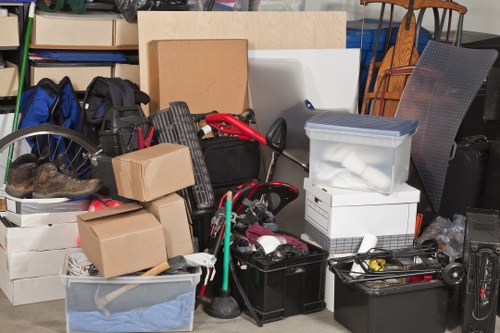 Practical recycling and recovery activities relevant to the area include:
- Source-separated dry recycling (paper, card, mixed plastics and metals)
- Food waste collection to anaerobic digestion or composting facilities
- Glass collection and quality-controlled glass streams
- Construction and demolition waste segregation for recycled aggregates
- Electronic waste and WEEE collections for certified recycling and refurbishment
Monitoring progress is essential. Regular performance reviews, KPI tracking and independent audits ensure that commercial waste in Golders Green moves steadily toward the recycling target. Businesses receive simple, actionable reports that show tonnage diverted from landfill, carbon savings and cost-benefit outcomes from increased recycling.
To support this transition we offer compliance-friendly solutions that dovetail with local planning and licensing expectations. Where required, bespoke waste transfer documentation and audit trails are provided to prove proper handling, transfer to licensed facilities and onward recycling. These measures make sustainable rubbish area management both practical and auditable for regulators and clients alike.
In summary, Golders Green commercial waste services are designed to deliver an eco-friendly waste disposal area and resilient, sustainable rubbish area through targeted recycling targets, strategic use of local transfer stations, charity partnerships and a modern low-carbon fleet. By combining sensible segregation at source, reuse partnerships and efficient logistics, businesses can reduce costs, boost recycling percentages and contribute to a cleaner, greener local environment.
