Health and Safety Policy — Commercial Waste Golders Green
This policy statement sets out the commitment of our organisation to maintain safe working conditions, practices and systems for all staff, contractors and visitors engaged in commercial waste operations in our rubbish company service area. It applies to all aspects of commercial waste collection Golders Green and related business waste activities. The aim is to identify and control risks, ensure compliance with applicable legal requirements and promote continuous improvement in health and safety performance.Scope and Objectives
The policy covers operational activities including commercial refuse collection, rubbish removal Golders Green, transfer and temporary storage, vehicle loading and site operations. Objectives include minimising accidents, preventing occupational ill health, controlling hazardous waste risks and ensuring that staff are competent and informed. The policy supports a structured risk assessment process and assigns clear responsibilities for implementation and review.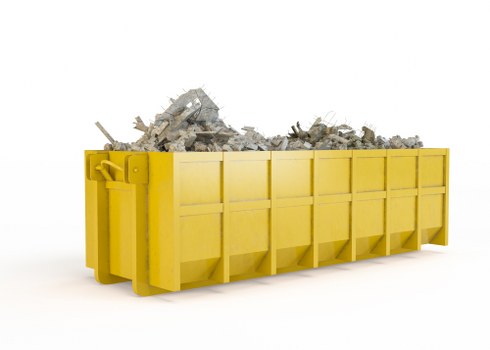 This organisation expects that all employees, subcontractors and managers will co-operate to achieve safe working practices. Key responsibilities include:
- Management — to provide leadership, resources and oversight;
- Supervisors — to ensure safe systems and training;
- Employees — to follow instructions, use PPE and report hazards promptly.
Risk Assessment and Control Measures
Risk assessments will be carried out for all routine and non-routine tasks related to commercial waste collection and rubbish removal Golders Green. Controls will be implemented following the hierarchy of control: elimination, substitution, engineering controls, administrative controls and personal protective equipment. Where residual risks remain, additional safeguarding will be applied and communicated to affected personnel. Training and competence are mandatory elements of risk control. Induction training covers site rules, manual handling, segregation of waste streams, sharp object awareness and incident reporting. Ongoing training includes vehicle safety, safe use of compactors and skip loaders, and handling of hazardous materials. Records of training, licenses and medical surveillance will be maintained and reviewed periodically to ensure competence for assigned duties.
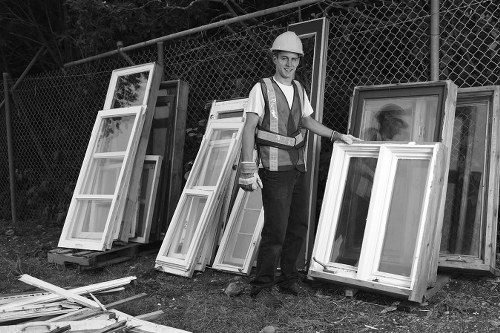
Equipment and PPE are selected based on task-specific risk assessments. PPE may include high-visibility clothing, gloves suitable for waste handling, safety footwear, eye protection and respiratory protection where necessary. Vehicles and mechanical aids will be maintained under a documented inspection and servicing regime to prevent failures that could lead to injury or environmental harm.
Incident Reporting, Investigation and Records — All incidents, near-misses and dangerous occurrences must be reported promptly and investigated to identify root causes and corrective actions. Record keeping will cover risk assessments, training, maintenance logs, incident reports and statutory notifications. Lessons learned will be communicated through toolbox talks and revisions to procedures to prevent recurrence.
 Monitoring, audits and management review are integral to assessing the effectiveness of the health and safety management system. Routine inspections, periodic safety audits and performance indicators will inform corrective and preventive actions. Senior management will review health and safety performance at least annually and whenever significant changes to operations, equipment or legislation occur.
 Operational controls extend to vehicle and traffic management, segregation of waste streams, secure containment of hazardous materials and clear site layouts to minimise pedestrian/vehicle conflicts. Manual handling risks are reduced through mechanical aids and task rotation. Subcontractors engaged for specialised commercial refuse services must demonstrate equivalent standards and comply with this policy as part of contract conditions.
Emergency preparedness and response arrangements are maintained to ensure rapid, effective action for spills, fires, injuries or other incidents affecting health, safety or the environment. Emergency plans identify roles, communication channels and required equipment. Emergency drills are conducted at planned intervals and results used to update procedures and training.
Legal compliance and duty-holder obligations are upheld. This policy is written to reflect statutory duties applicable to commercial waste operators and emphasises the organisation's commitment to adhering to relevant regulations and good practice without listing jurisdiction-specific details. Responsibilities under this policy are allocated and documented; competent advisers will be used where specialist guidance is required.
Management endorses this policy and expects active participation from all personnel to maintain a culture of safety and continual improvement in commercial waste operations. Periodic reviews will ensure the policy remains relevant to evolving operational needs, changes in waste streams and emerging risks associated with commercial waste handling in the service area. Signed on behalf of senior management: the policy will be communicated, implemented and available to all employees and relevant stakeholders.
